
We remember walking into our grandmother’s kitchen. The air was filled with the scent of roasted coriander and dried chilies. This smell was more than just a smell; it was a promise of a meal made with love and patience.
Today, we often grab convenient packets from the supermarket. But we miss the real depth of flavor.
Choosing between homemade masala vs store-bought is a big decision for many Indian families. Commercial versions are quick, but they miss the soul of traditional recipes. We think the best homemade masala, like Aaji’s, makes a simple curry into a masterpiece.
In this article, we look at why going back to these roots makes your cooking better than any store-bought option.
Key Takeaways
- Traditional spice blends offer superior freshness and aromatic intensity.
- Commercial products often contain fillers that dilute the natural flavor profile.
- Aaji’s secret techniques emphasize the importance of roasting spices at the right temperature.
- Preparing your own seasoning allows for complete control over ingredient quality.
- Small batches ensure that your pantry remains stocked with potent, flavorful ingredients.
The Cultural Significance of Traditional Indian Masala
In Indian cuisine, traditional Indian masala is more than spices. It’s a cultural cornerstone. We use these masalas to add flavor and connect with our heritage.
Making traditional Indian masala is an art. It involves picking and mixing spices with unique flavors. This is often a family affair, with recipes passed down through generations.
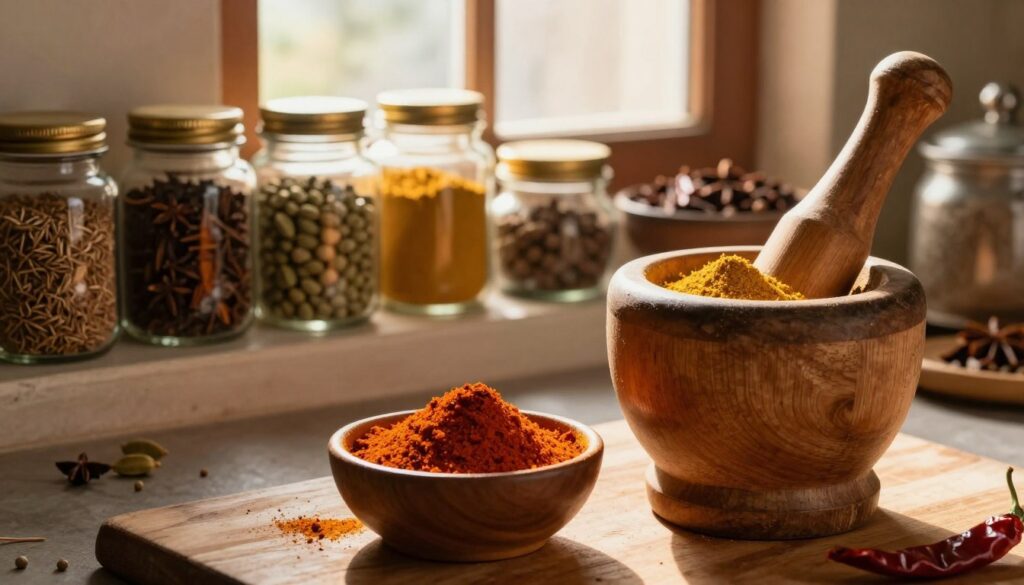
These masalas are key in Indian daily life. They are used in rituals and ceremonies. For example, some spice blends are used in religious ceremonies and at weddings and festivals.
The cultural value of traditional Indian masala also shows in its regional diversity. Different regions have their own masala blends. These reflect local culture, ingredients, and history. This diversity celebrates India’s rich culinary mosaic.
By using and making traditional Indian masala, we keep our culinary heritage alive. We pass it to future generations. This tradition connects us to our past and enriches our cultural identity.
Understanding the Homemade Masala vs Store Bought Debate
In the world of Indian food, there’s a big talk about making masala at home versus buying it. This talk is about taste, health, and tradition. We need to look at what makes these two choices different.
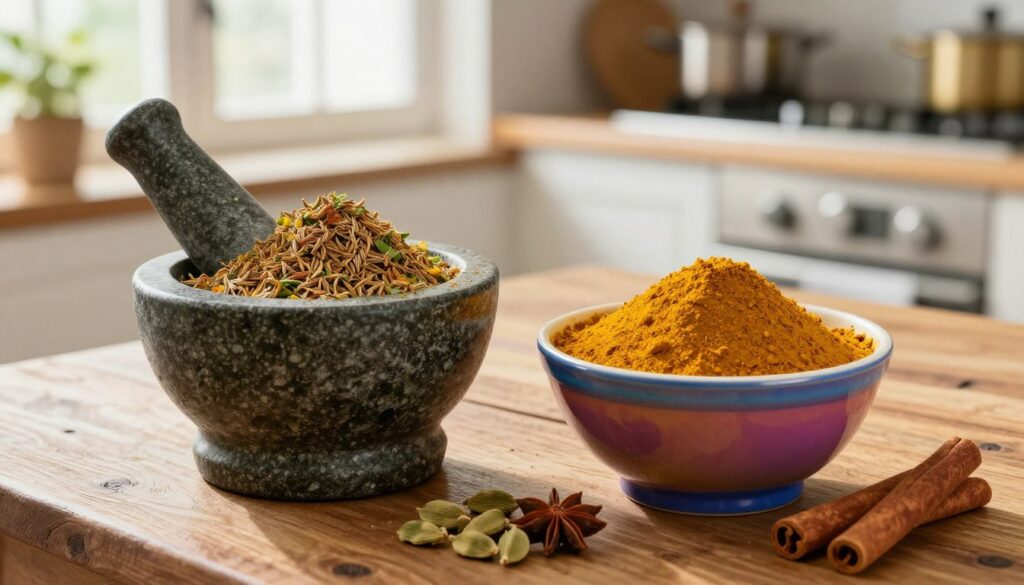
Homemade masalas are made from whole spices that are ground fresh. This means they taste and smell better. Store-bought masalas, however, might have spices that have been sitting for a long time. This can make them less strong.
| Aspect | Homemade Masala | Store-Bought Masala |
|---|---|---|
| Ingredient Quality | Whole spices, freshly ground | Pre-ground spices, potential additives |
| Flavor and Aroma | More vibrant, aromatic | May lack freshness, uniform taste |
| Health Considerations | Control over ingredients, no preservatives | May contain preservatives, additives |
| Customization | Can be tailored to personal taste | Standardized flavor profile |
The choice between homemade and store-bought masala depends on many things. It’s about what you like, your health, and how important flavor is to you. Knowing these differences helps us decide what’s best for our cooking.
The Hidden Ingredients in Commercial Spice Blends
Commercial spice blends often have hidden ingredients. These can change the taste and might not be good for our health.
Common Additives and Preservatives
Many spice blends have additives and preservatives. These help them last longer and look better. Anti-caking agents like silicon dioxide keep the mix from getting lumpy. Preservatives like sodium benzoate help them stay fresh longer.
Choosing chemical-free masala means avoiding these additives. Making your own spice blends lets you pick what goes in. This way, you can make sure they don’t have harmful chemicals.
| Additive | Purpose |
|---|---|
| Silicon Dioxide | Anti-caking agent |
| Sodium Benzoate | Preservative |
| Artificial Colors | Enhance appearance |
The Reality of Artificial Colors and Flavors
Artificial colors and flavors are also in commercial spice blends. They make the spices look and taste better. But, they might not be good for our health.
Choosing homemade spices means no artificial colors or flavors. This makes our masalas healthier and more true to taste and smell.
Why Homemade Spices Are Better for Your Health
Using homemade spices makes our food taste better and is healthier. We can pick the best ingredients for our spice blends. This way, we know what we’re eating.
Homemade spices don’t have additives found in store-bought mixes. This makes our food taste better and is better for us.
Nutrient Retention in Freshly Ground Spices
Freshly ground spices keep more nutrients than store-bought ones. Whole spices release volatile oils when ground. These oils are full of good stuff like antioxidants.
Whole spices last longer and stay strong. Grinding them at home means we use them when they’re most nutritious.
| Spice | Nutrient Retained | Benefit |
|---|---|---|
| Turmeric | Curcumin | Anti-inflammatory properties |
| Cumin | Antioxidants | Aids digestion |
| Coriander | Vitamins and Minerals | Supports immune function |
Avoiding Hidden Fillers and Anti-Caking Agents
Commercial spice blends have fillers and agents that aren’t good for us. Making our own spice blends at home helps us avoid these.
Spices in stores have silicon dioxide to stop clumping. But eating too much of it can harm our health.
Choosing homemade spices means better food quality and a healthier life.
The Art of Sourcing Quality Raw Ingredients
Making the best homemade masala starts with good raw ingredients. The quality of a spice blend depends on its freshness and purity. Finding top-notch whole spices is an art that needs knowledge and care.
For a great homemade masala, the ingredients matter a lot. We pick whole spices carefully. These will be ground into the final spice mix.
Selecting Whole Spices for Maximum Potency
Choosing whole spices is key for a strong homemade masala. Whole spices keep their flavor and smell better than ground ones. They are less exposed to air, light, and moisture. We look for spices that are fresh, bright in color, and smell good.
Key considerations when selecting whole spices include:
- Freshness: Choose spices that are fresh or stored well.
- Origin: Spices from certain places have unique tastes and quality.
- Appearance: Good spices are bright in color and don’t have mold.
The Importance of Sun-Drying and Cleaning
Sun-drying spices makes them taste better and last longer. It removes extra moisture, which can cause mold. Cleaning spices is also crucial to get rid of dirt or bad stuff.
Here’s how sun-drying compares to machine drying:
| Drying Method | Effect on Flavor | Preservation Quality |
|---|---|---|
| Sun-Drying | Enhances natural flavor | High |
| Machine Drying | May lose some natural flavor | Variable |
By choosing and preparing our ingredients well, we make sure our masala is tasty and high-quality. This focus on detail makes our homemade masala stand out from store-bought ones.
Flavor Profiles: Freshness Versus Mass Production
Homemade masala and store-bought masala taste different. This is because of how spices are processed and stored. This affects their taste and smell.
Homemade masalas are made in small amounts. This means the spices are always fresh. Freshness is key for great taste.
The Volatile Oils That Define Authentic Taste
The real taste of homemade masala comes from volatile oils in fresh spices. These oils make spices smell and taste good. When spices are ground, these oils come out and are strongest.
Some important things about volatile oils in homemade masalas are:
- Intensity of flavor: Fresh spices taste stronger because of more volatile oils.
- Aromatic properties: Homemade masalas smell better because of fresh spices.
- Complexity: Mixing different spices and oils makes a rich taste that store-bought can’t match.
Why Store-Bought Masalas Often Taste Uniform
Store-bought masalas are made in big batches. This makes them taste the same. They use old spices, additives, and preservatives to keep them the same.
Why store-bought masalas don’t taste as good as homemade is:
- Use of stale spices: Old spices lose their flavor and smell.
- Additives and preservatives: These can change the taste of spice blends.
- Standardized production processes: Making things in big batches means they taste the same, but not as rich as homemade.
Choosing homemade masala lets you enjoy the deep, complex flavors of Indian food.
The Economic Perspective: Cost and Value
When we look at making masala, we see a big debate. It’s between making it at home or buying it. Both sides have their own economic points.
At first, making chemical free masala at home might seem pricey. But, looking at the long-term benefits changes our view.
Initial Investment Versus Long-Term Quality
Making homemade masala needs money for spices, grinding tools, and time. But, this cost means better quality and taste for you.
A spice expert says, “Homemade masala is the best. It uses fresh, strong spices for better taste and smell.”
“The quality of homemade masala is unparalleled because it allows for the use of fresh, potent ingredients, ensuring a more flavorful and aromatic experience.”
Let’s compare costs:
| Aspect | Homemade Masala | Store-Bought Masala |
|---|---|---|
| Initial Cost | Higher (due to initial investment in spices and equipment) | Lower (ready-to-use packets) |
| Long-Term Cost | Lower (bulk purchasing of spices, no preservatives or additives) | Higher (frequent repurchases, potential for expired or stale spices) |
| Quality Control | High (control over ingredients and freshness) | Variable (dependent on manufacturer’s quality control) |
Reducing Waste Through Controlled Batch Sizes
Homemade masala also helps save money by avoiding waste. We only make what we need. This stops stale or expired spices.
This way, we save money and get fresh, strong masala. It’s good for our kitchen and the planet.
In the end, making masala at home might cost more upfront. But, the long-term benefits of quality, taste, and less waste make it worth it. It’s a smart choice for those who want chemical free masala.
Traditional Indian Masala Techniques Passed Down Through Generations
Traditional Indian masala is more than spices. It’s a legacy passed down through ages. The making of masala is rooted in Indian culture and has evolved over generations.
Making masala is not just mixing spices. It needs a deep understanding of spices and how they work together. This knowledge has been shared through generations, with each family or region having its own way.
The Role of the Sil-Batta and Modern Grinders
The sil-batta, a stone grinder, has been used for centuries. It’s still loved for bringing out spice flavors and aromas without heat damage.
But, modern electric grinders are now used for their speed and ease. They can get hot, which might change spice flavors. Yet, they’re useful for making large amounts of masala.
Balancing Ratios for Regional Authenticity
Getting the spice balance right is key for authentic Indian masala. Each region in India has its own spice mix. For example, South Indian masala is stronger, with mustard seeds and fenugreek. North Indian masala has more cumin, coriander, and cinnamon.
To get the regional taste right, you need to know the traditional spice ratios and methods. Trying different ratios and techniques helps make a masala that’s true to its roots.
- Understanding the traditional spice ratios of different regions
- Using the right combination of spices for the desired flavor profile
- Adjusting the proportions according to personal taste preferences
As we keep traditional practices alive, we should also innovate. This way, we can keep traditional Indian masala alive for more people.
Chemical Free Masala: A Commitment to Purity
Making our own masala is good for our health. We control what’s in our food. This means our masala has no bad chemicals.
Chemical-free masala is more than a trend. It’s choosing to avoid bad stuff in store spices. Making masala at home keeps us safe from harmful substances.
The Impact of Pesticide-Free Sourcing
Getting spices without pesticides is key. Pesticides can harm us. Choosing pesticide-free spices lowers this risk.
Buying from trusted farmers helps our health and the planet. It’s good for us and the earth.
Ensuring Food Safety in Your Own Kitchen
Keeping food safe at home is easy. Clean and dry spices before grinding. This stops spoilage and contamination.
Use clean tools and store masala in tight containers. This keeps flavors and smells in. It also keeps out bad stuff.
By doing these things, our homemade masala is tasty and safe. We can enjoy it without worry.
Practical Tips for Storing Your Homemade Blends
How you store your homemade masala is very important. It affects how long it lasts and how good it tastes. Keeping it right helps keep the flavor and smell strong.
To keep your masala fresh, you need to protect it. This means keeping it away from air, moisture, and light. Here are some tips to help:
Maintaining Potency Over Time
- Use airtight containers to keep air out. This helps your spices stay strong.
- Don’t put your containers in direct sunlight or near heat.
- Choose glass containers. They won’t change the taste of your masala.
Choosing the Right Containers for Longevity
When picking containers, look for ones that are airtight and made well. Glass jars with tight lids are great. You can also use stainless steel containers. They last long and don’t rust.
Conclusion
The debate between homemade masala and store bought is big. It’s about the real taste and quality of spices in Indian food. Homemade masala adds a special flavor and smell that store bought can’t match.
When you make your own masala, you use the best ingredients. You also get to add your own special touch to your cooking. Aaji’s Masala shows how important Indian spice blending is. It’s all about tradition and skill.
We want you to start making your own masala. You now have the knowledge to make tasty, healthy meals. These meals will make your family and friends happy.